
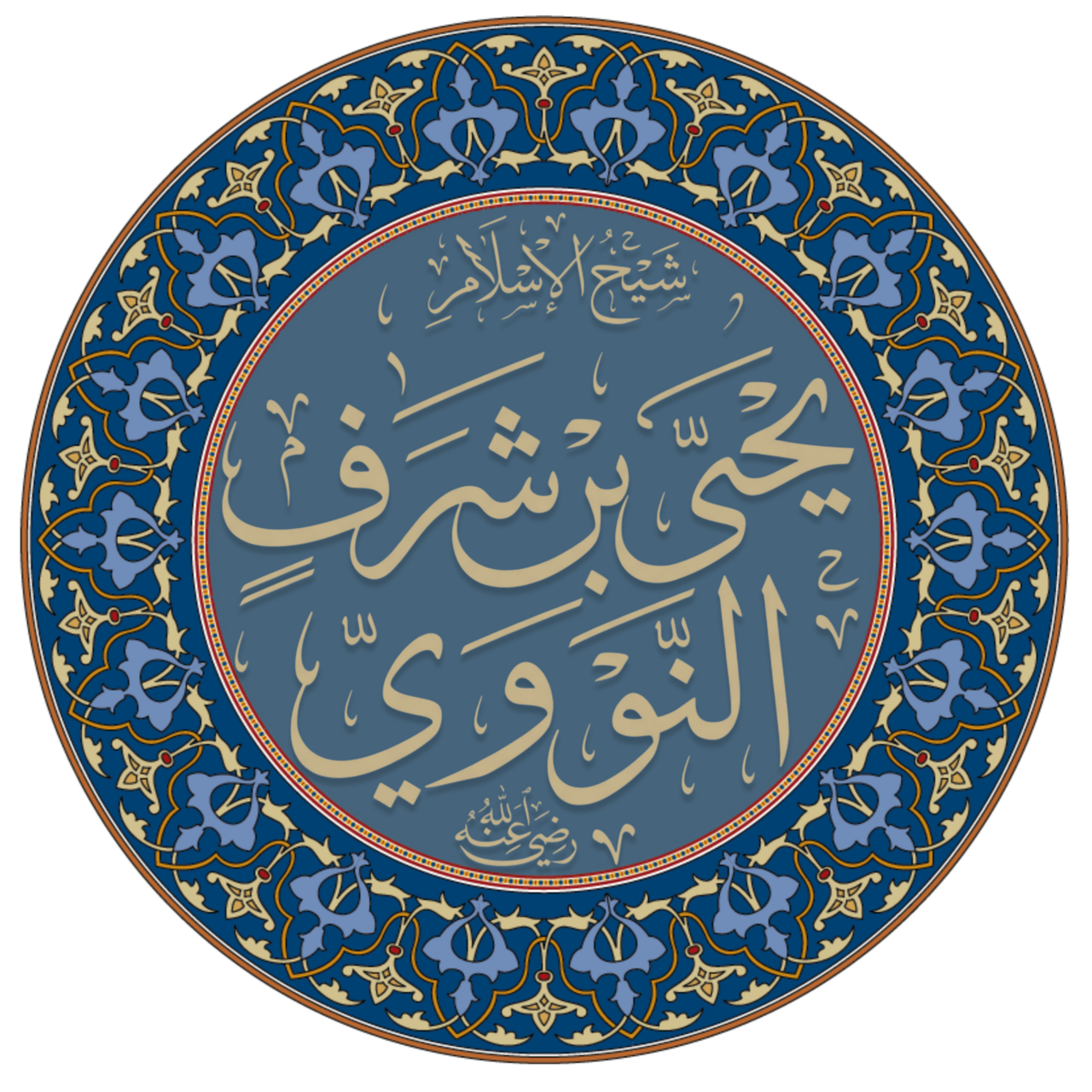
Al-Nawawi
Shafi'i jurist and hadith scholar, author of Riyadh as-Saaliheen.

ShafiNotes · CC0
He is considered, along with Abu al-Qasim al-Rafi'i, one of the Two Shaykhs of the Shafi'i school.
- field
- Jurisprudence, hadith, theology, biography
- nationality
- Syrian (born in Nawa, lived in Damascus)
- known_for
- Authoring Riyadh as-Saaliheen, Sharh Sahih Muslim, Forty Hadiths; leading Shafi'i jurist
Lore & Background
Al-Nawawi was born at Nawa near Daraa, Syria. As a youth of ten, he avoided play and devoted himself to reciting the Qur'an. His teacher, warned by a visitor that the boy would become a great scholar, informed al-Nawawi's father, who decided to dedicate his son's life to Islam. At age seven, al-Nawawi awoke on the twenty-seventh night of Ramadan and asked his father about a light filling the house; his father concluded it was Laylat al-Qadr. He was renowned for extreme asceticism: eating one meal daily, ignoring personal comforts, never marrying, and devoting all time to learning, writing, and teaching. Al-Nawawi twice drew the ire of Mamluk Sultan Baybars. Once, after a drought, he warned Baybars that taxing the people abusively would bring divine punishment. When threatened with expulsion, al-Nawawi replied that threats did not harm him, as advising the ruler was obligatory. In another encounter, he scolded Baybars for wanting to redirect waqf funds, and the Sultan accepted his counsel.
Reader's Guide
Al-Nawawi's significance lies in his prolific output and lasting influence across Islamic scholarship. Despite dying at 45, he authored at least fifty books, writing over forty pages daily from age 18. His works include Riyadh as-Saaliheen, a collection of hadith on ethics and conduct still widely read; Sharh Sahih Muslim, considered one of the best commentaries on that hadith collection; and al-Arba'in al-Nawawiyya (Forty Hadiths). He also wrote Minhaj al-Talibin, a classical manual of Shafi'i law, and al-Majmu', a comprehensive legal manual. His legacy extends beyond the Shafi'i school: his hadith collections are respected in all madhabs. Al-Dhahabi called him 'the master of the hadith scholars.' His tomb in Nawa was demolished in 2015 during the Syrian Civil War by rebels belonging to Al Nusra.
Did You Know?
- Al-Nawawi never married, believing it would distract him from scholarship and worship.
- He ate only one meal a day, after the late evening prayer.
- His tomb was demolished in 2015 by Syrian rebels belonging to Al Nusra.
- He wrote over 40 pages daily from age 18 until his death.
Gallery




Frequently Asked Questions
Who is Al-Nawawi?
Yahya ibn Sharaf al-Nawawi was a 13th-century Syrian scholar who specialized in Islamic jurisprudence, hadith, and theology. He is most commonly identified as one of the two leading authorities of the Shafi'i legal school.
What are Al-Nawawi's most famous works?
His best-known texts include Riyadh al-Saliheen (The Meadows of the Righteous), a detailed commentary on Sahih Muslim, and a widely circulated collection of forty hadiths. These writings continue to be studied and referenced across the Muslim world.
Why is Al-Nawawi considered so important?
Alongside Abu al-Qasim al-Rafi'i, he is recognized as one of the Two Shaykhs of the Shafi'i school, a title that marks him as a peak authority whose legal rulings and hadith scholarship carry exceptional weight in that tradition.
More in Philosophers And Thinkers 25-32
Elsewhere in the Philosophers And Thinkers universe
Spotted an error? Know more?
This is a living reference — every entry is fact-audited, and reader corrections feed straight into our audit queue. Suggest an edit · See this site's audit record