
William James
American philosopher and psychologist; father of American psychology.

via Wikipedia: William James · see source
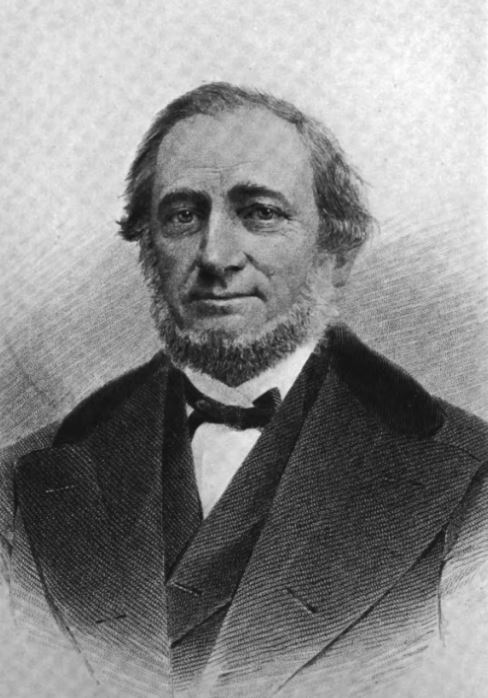
William James (January 11, 1842 – August 26, 1910) was an American philosopher and psychologist. The first educator to offer a psychology course in the United States, he is considered one of the leading thinkers of the late 19th century and is often dubbed the 'father of American psychology.' Along with Charles Sanders Peirce, James established the philosophical school known as pragmatism, and he also developed the philosophical perspective known as radical empiricism. His most influential books include The Principles of Psychology, Essays in Radical Empiricism, and The Varieties of Religious Experience.
- born
- January 11, 1842
- died
- August 26, 1910
- field
- Philosophy, Psychology
- nationality
- American
- known_for
- Pragmatism, functional psychology, radical empiricism, The Principles of Psychol
Verified Timeline
Lore & Background
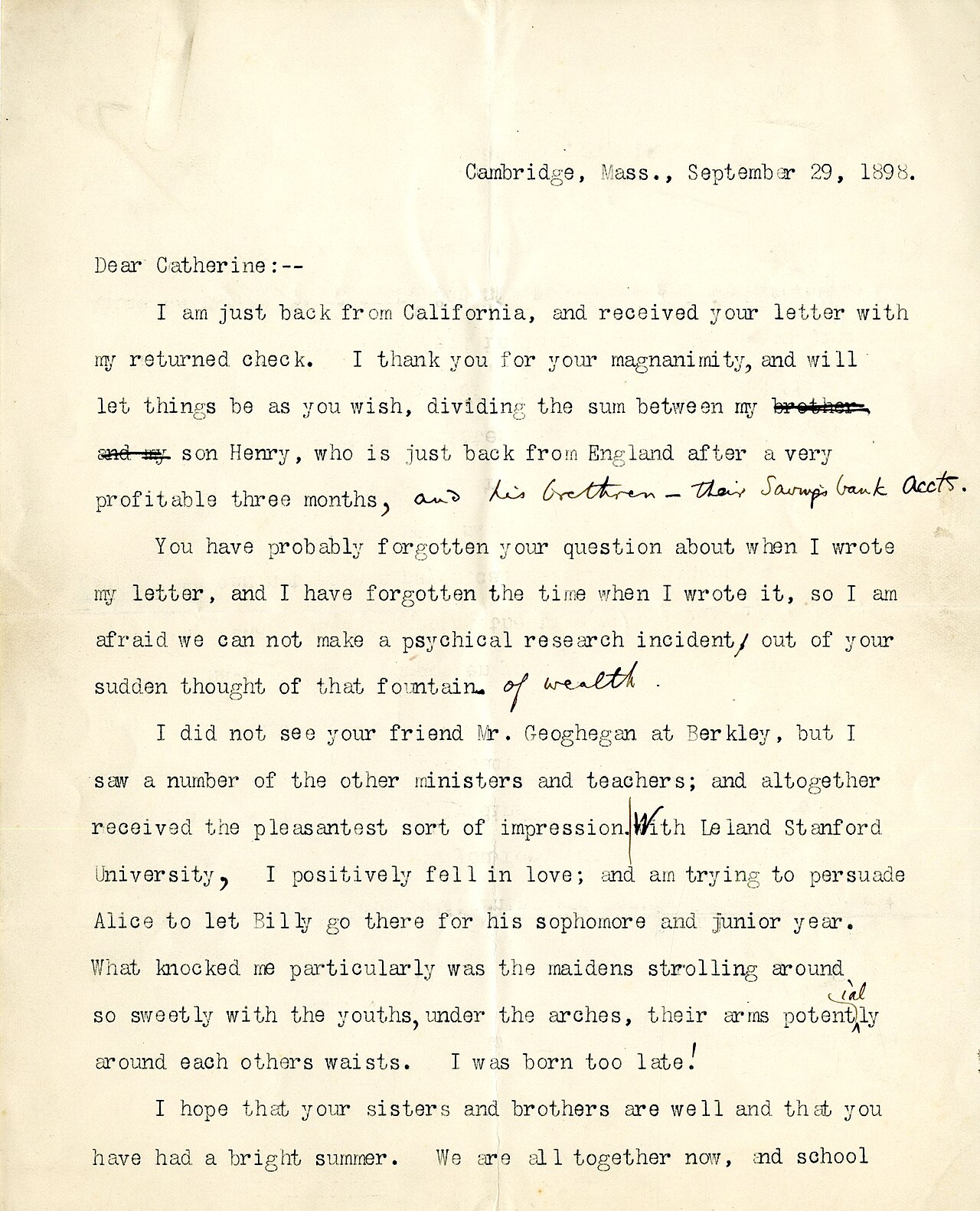
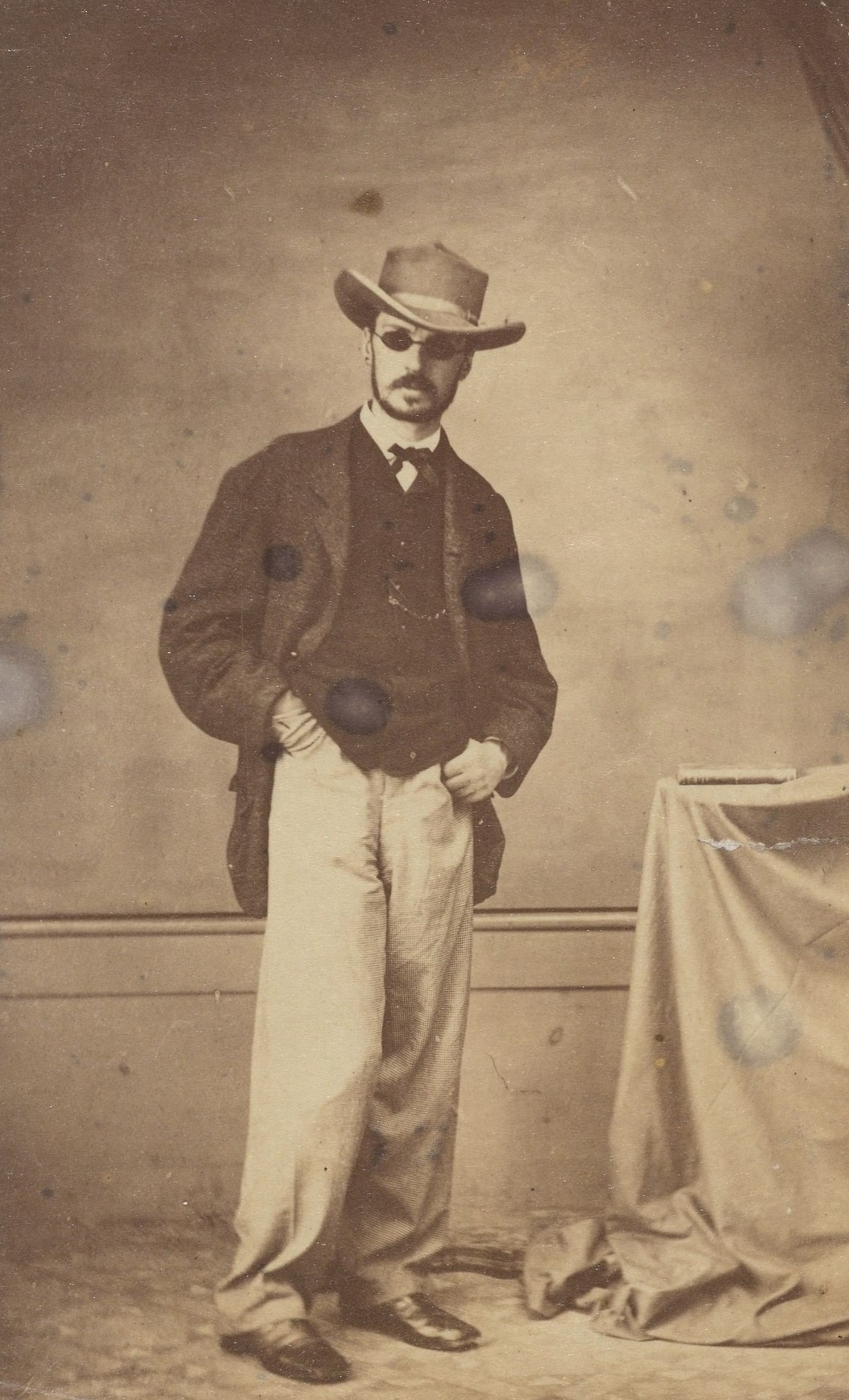
William James was born at the Astor House in New York City on January 11, 1842, the son of Swedenborgian theologian Henry James Sr. and brother of novelist Henry James and diarist Alice James. He trained as a physician at Harvard Medical School, earning his MD in June 1869, but never practiced medicine. Instead, he pursued interests in psychology and philosophy, teaching anatomy and physiology at Harvard before introducing experimental psychology courses there in the 1875–1876 academic year. James suffered from various physical ailments and periods of depression in his early adulthood, which he called his 'soul-sickness,' resolved only in 1872. He joined the Metaphysical Club in 1872 with Charles Peirce, Oliver Wendell Holmes, and Chauncey Wright. In 1882, James joined the Theosophical Society, and he later became president of the British Society for Psychical Research in 1884 and 1885. He wrote widely on epistemology, education, metaphysics, psychology, religion, and mysticism. Among his students at Harvard were Theodore Roosevelt, George Santayana, W. E. B. Du Bois, Gertrude Stein, and Mary Whiton Calkins.
Reader's Guide
William James's significance lies in his foundational role in American psychology and philosophy. As the first to offer a psychology course in the United States, he helped establish psychology as a scientific discipline. His book The Principles of Psychology (1890) totaled twelve hundred pages in two volumes and took twelve years to complete, becoming a groundbreaking text. Along with Charles Sanders Peirce, James established the philosophical school of pragmatism, which emphasizes 'fruits over roots'—testing ideas by their practical consequences in lived experience. He also developed functional psychology and radical empiricism. A Review of General Psychology analysis published in 2002 ranked James as the 14th most eminent psychologist of the 20th century, and a 1991 survey in American Psychologist ranked his reputation second after Wilhelm Wundt. His work influenced philosophers and academics such as Hilary Putnam, Richard Rorty, Edmund Husserl, Bertrand Russell, John Dewey, and Ludwig Wittgenstein.
Did You Know?
- James was the first educator to offer a psychology course in the United States, teaching his first experimental psychology course at Harvard in the 1875–1876 academic year.
- He originally studied medicine to be a physiologist but wrote in 1902: 'I drifted into psychology and philosophy from a sort of fatality. I never had any philosophic instruction, the first lecture on psychology I ever heard being the first I ever gave.'
- James joined the Anti-Imperialist League in 1898, opposing the United States annexation of the Philippines.
- His book The Principles of Psychology took twelve years to complete and totaled twelve hundred pages in two volumes.
- A 1991 survey ranked James's reputation second only to Wilhelm Wundt among psychologists.
Academic Life and the Worldly Philosopher
After the war, Heilbroner spent a brief stint in banking before turning toward academia in the 1950s. He joined the New School for Social Research in New York as a research fellow, where he encountered the work of Adolph Lowe, a leading figure of the German Historical School, an influence that would shape his thinking for decades. In 1963 he completed his doctorate in economics at the same institution, and by 1971 he had been named the Norman Thomas Professor of Economics, a position he held for more than two decades. His primary teaching focus was the history of economic thought, a subject that allowed him to weave together history, philosophy, and economics in a manner he felt pure economic analysis could not. He saw himself less as a conventional economist than as a social theorist and what he called a "worldly philosopher"—someone preoccupied with how economic structures actually function in the real world. Despite this self-description, his peers recognized his standing: in 1972 he was elected vice president of the American Economic Association. He also devised a now-standard four-category framework for classifying economies—traditional, command, market, and mixed—that remains a staple in introductory courses.
The Worldly Philosophers and Its Enduring Reach
Published in 1953 by Simon & Schuster, The Worldly Philosophers: The Lives, Times and Ideas of the Great Economic Thinkers went on to sell nearly four million copies, making it the second-best-selling economics text in history, trailing only Paul Samuelson's university textbook. The book traces the intellectual lineage from Adam Smith through Malthus and Ricardo, the utopian socialists including Owen, Saint-Simon, and Fourier, Karl Marx, the Victorian-era economists such as Marshall and Bastiat, Thorstein Veblen, John Maynard Keynes, and Joseph Schumpeter. What distinguished Heilbroner's approach was his insistence on treating each thinker as a living person embedded in a particular historical moment rather than as a disembodied source of propositions. The seventh edition, released in 1999, added a final chapter titled "The End of Worldly Philosophy?" in which Heilbroner offered both a sobering assessment of economics as a discipline and an optimistic vision for a renewed "worldly philosophy" that would fold the social dimensions of capitalism back into economic analysis. The book's broad, narrative-driven style made complex economic history accessible to general readers and students alike, securing its place as a gateway text for generations.
From Socialist Conviction to a Scandinavian Ideal
For nearly his entire professional life, Heilbroner identified as an outspoken socialist, a position that colored his teaching, his writing, and his public commentary. Yet in a 1989 essay published in The New Yorker, written just before the Soviet Union collapsed, he declared that the decades-long contest between capitalism and socialism had ended, with capitalism the clear victor. He argued that capitalism organized the material affairs of humanity more satisfactorily than its rival system. Two years later, in the journal Dissent, he went further, calling capitalism "as unmistakable a success as socialism has been a failure" and paying tribute to Milton Friedman, Friedrich Hayek, and Ludwig von Mises for their defense of free markets. He also observed that democratic liberties had never durably taken root in any nation that had declared itself fundamentally anticapitalist. Crucially, however, Heilbroner did not embrace laissez-faire capitalism. His preferred model remained the heavily redistributionist welfare states of Scandinavia, and he described his ideal society as "a slightly idealized Sweden."
A New York Life: Origins, Service, and Family
Robert L. Heilbroner was born in 1919 in New York City into a wealthy German Jewish family. His father, Louis Heilbroner, was a businessman who founded the men's clothing retailer Weber & Heilbroner, giving the young Robert a childhood steeped in commercial enterprise. He went on to graduate from Harvard University in 1940 with a summa cum laude degree spanning philosophy, government, and economics—a triple focus that foreshadowed his lifelong interdisciplinary approach. During World War II he served in the United States Army, where he was assigned to the Office of Price Control and worked under the institutional economist John Kenneth Galbraith, an experience that likely deepened his interest in how governments manage economic life. After the war he briefly worked as a banker before committing to academia. Heilbroner died in New York City in 2005 at the age of 85, leaving behind two sons, David and Peter, and four grandchildren—Quentin, Katrina, Henry, and Sam. His life, from a Manhattan clothing dynasty to the lecture halls of the New School, was itself a kind of economic narrative.
Gallery
Frequently Asked Questions
Who is William James?
William James (1842–1910) was an American philosopher and psychologist widely regarded as the founding figure of American psychology. He was the first educator in the United States to teach a dedicated psychology course at a university.
What is William James most famous for?
He is best known for co-founding the philosophical movement called pragmatism alongside Charles Sanders Peirce, as well as for his landmark text The Principles of Psychology. His other major intellectual contribution is the framework he called radical empiricism.
What is pragmatism in William James's philosophy?
Pragmatism, which James helped establish with Charles Sanders Peirce, holds that the meaning and truth of an idea are judged by its practical consequences and usefulness in lived experience. James applied this lens to questions of religion, free will, and knowledge throughout his career.
What is radical empiricism?
Radical empiricism is James's philosophical position that raw experience itself—without the need for abstract categories like 'substance' or 'relations'—is the fundamental stuff of reality. He argued that even the connections between things are themselves part of experience rather than something added on top of it.
Why is William James called the 'father of American psychology'?
He earned that title because he was the first educator in the U.S. to offer a formal psychology course, effectively launching the discipline as an academic field in America. His functional approach to studying the mind, laid out in The Principles of Psychology, shaped how American psychologists would think about mental processes for generations.
More in Philosophers And Thinkers 25-32
Elsewhere in the Philosophers And Thinkers universe
Spotted an error? Know more?
This is a living reference — every entry is fact-audited, and reader corrections feed straight into our audit queue. Suggest an edit · See this site's audit record