
Abraham Maslow
Psychologist who argued humans no longer have instincts.

Philipp Guttmann · CC BY-SA 4.0
Abraham Maslow argued that humans no longer have instincts because we have the ability to override them in certain situations. He felt that what is called instinct is often imprecisely defined, and really amounts to strong drives. For Maslow, an instinct is something which cannot be overridden, and therefore while the term may have applied to humans in the past, it no longer does.
- field
- Psychology
- nationality
- American
Lore & Background
In the context of veneer theory, Maslow is cited as a proponent of the idea that human morality is a cultural overlay. He argued that humans no longer have instincts because we can override them in certain situations. He felt that what is called instinct is often imprecisely defined and really amounts to strong drives. For Maslow, an instinct is something which cannot be overridden, and therefore while the term may have applied to humans in the past, it no longer does.
Reader's Guide
Maslow's position on instincts is used to support the veneer theory view that human morality is not biologically rooted. By defining instinct as something that cannot be overridden, he concluded that humans no longer possess instincts. This implies that any moral or social behavior must come from a cultural overlay rather than an innate biological drive. His argument is that what people call instincts are actually strong drives that can be overridden, so they do not qualify as true instincts.
Did You Know?
- Maslow argued that humans no longer have instincts because we have the ability to override them in certain situations.
- He felt that what is called instinct is often imprecisely defined and really amounts to strong drives.
- For Maslow, an instinct is something which cannot be overridden.
- He believed that while the term 'instinct' may have applied to humans in the past, it no longer does.
The Redefinition of Instinct
Abraham Maslow, working as a psychologist, challenged a term that had long gone unexamined in discussions of human behavior: instinct. In his view, the word was routinely deployed in a sloppy, imprecise way, lumping together phenomena that deserved sharper distinction. For Maslow, what many thinkers casually labeled an instinct was, upon closer inspection, nothing more than a powerful drive—a strong motivational force that pushes a person toward a particular action. A true instinct, by his strict definition, occupied a different category entirely. It was a behavioral pattern so fixed and so resistant to modification that no amount of will, learning, or situational pressure could alter it. Once a behavior could be set aside, redirected, or suppressed under the right circumstances, it had already fallen outside the proper meaning of the word. Maslow's insistence on this boundary was not merely semantic; it reshaped how one understood the architecture of human motivation and the degree of freedom a person actually possesses over their own impulses.
The Override Principle
At the heart of Maslow's argument lay a single, decisive criterion: the capacity to override. If a behavioral tendency can be resisted, postponed, or deliberately set aside when the situation calls for it, then it does not meet his threshold for what genuinely qualifies as an instinct. He pointed to the everyday reality that human beings routinely do exactly this—choosing restraint over impulse, patience over aggression, cooperation over selfishness. In those moments of self-governance, the so-called instinct reveals itself as something far more flexible than the label suggests. Maslow treated this override capacity not as an exception or a rare triumph of reason, but as evidence that the underlying mechanism was, all along, a drive of considerable strength rather than an immutable biological command. The distinction mattered because it placed human agency at the center of the discussion, refusing to reduce people to creatures simply executing pre-programmed scripts.
A Historical Shift in Human Nature
Maslow did not dismiss the possibility that the term instinct once carried genuine weight when applied to human beings. He allowed that, at some earlier stage in the species' development, certain behavioral patterns may have been so rigid and so impervious to modification that they satisfied his strict definition. In that historical sense, calling them instincts would have been defensible. What he insisted upon was the present tense: the conditions that once made such rigidity possible no longer obtain. The very ability to override—to step back from an impulse, to weigh alternatives, to act against the strongest pull—had become a stable feature of human psychology. This meant the vocabulary itself needed updating. A word that accurately described a past condition could mislead if carried forward unchanged into a present where the underlying reality had shifted. Maslow's position thus carried an implicit claim about human development: we are not the same kind of behavioral system we once were, and our language about ourselves should reflect that change.
His Position in the Moral Psychology Debate
Maslow's remarks on instinct and drive sit within a broader and more contentious conversation about the foundations of human morality. In the landscape of that debate, one camp—sometimes labeled the veneer position—treats moral behavior as a thin cultural coating over an essentially selfish and brutish substrate, a view traceable to thinkers like Hobbes and Huxley and echoed in the work of biologists such as George C. Williams. Maslow's framework, as presented in this context, complicates that picture. By insisting that what is called instinct is often merely a strong drive, and by emphasizing the human capacity to override such drives, he opens space for a view in which moral behavior is neither a fragile overlay nor a fixed biological command but something shaped by a genuine, exercisable capacity for self-direction. He does not simply deny that powerful impulses exist; he reclassifies them, and in doing so, he shifts the explanatory burden away from a static, selfish nature and toward the dynamic interplay between drive, choice, and circumstance that characterizes human social life.
Gallery



Frequently Asked Questions
Who is Abraham Maslow?
Abraham Maslow was an American psychologist (1908–1970) best known for developing the hierarchy of needs and for championing the humanistic approach to understanding people.
What is Maslow's hierarchy of needs?
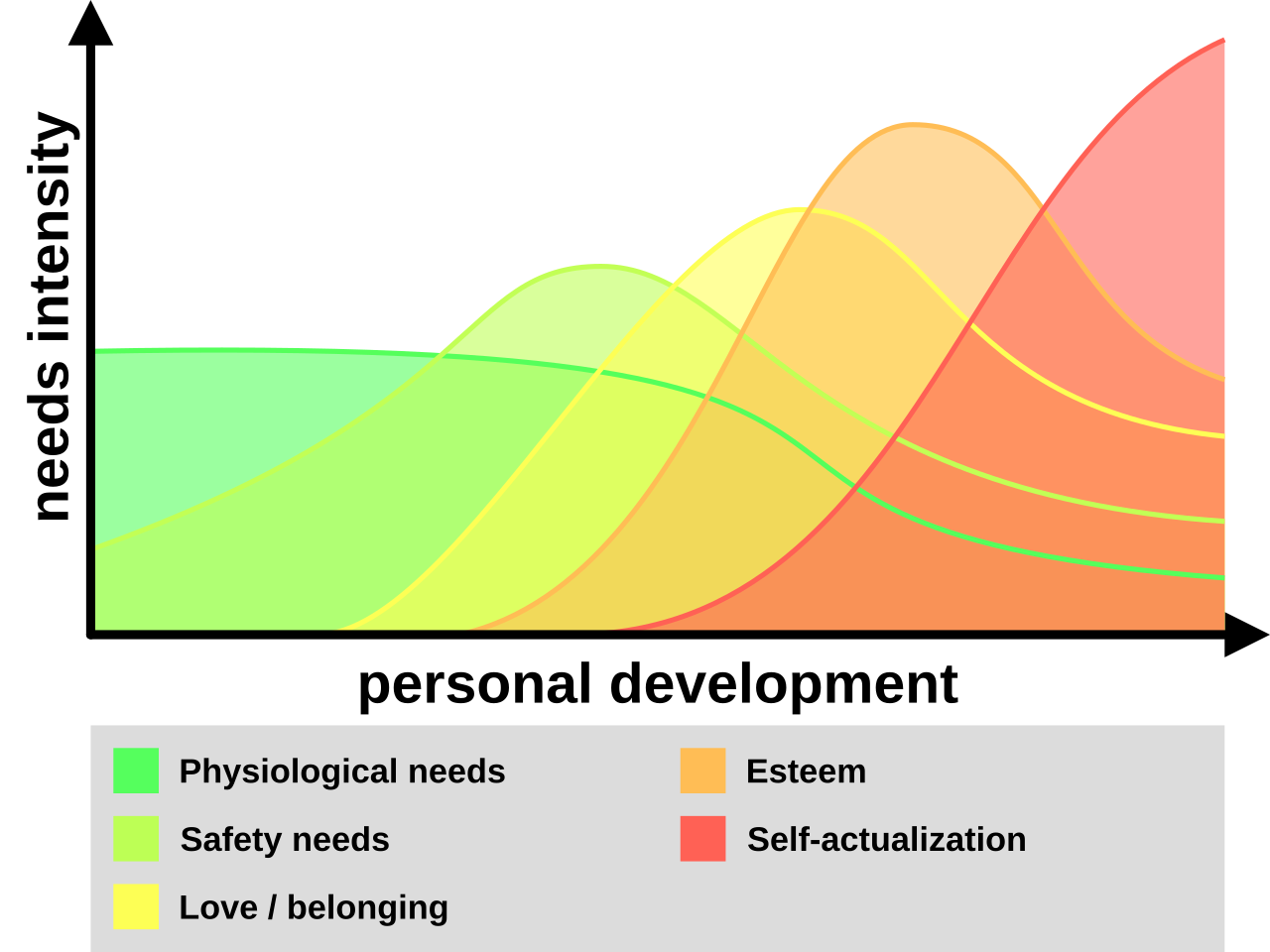
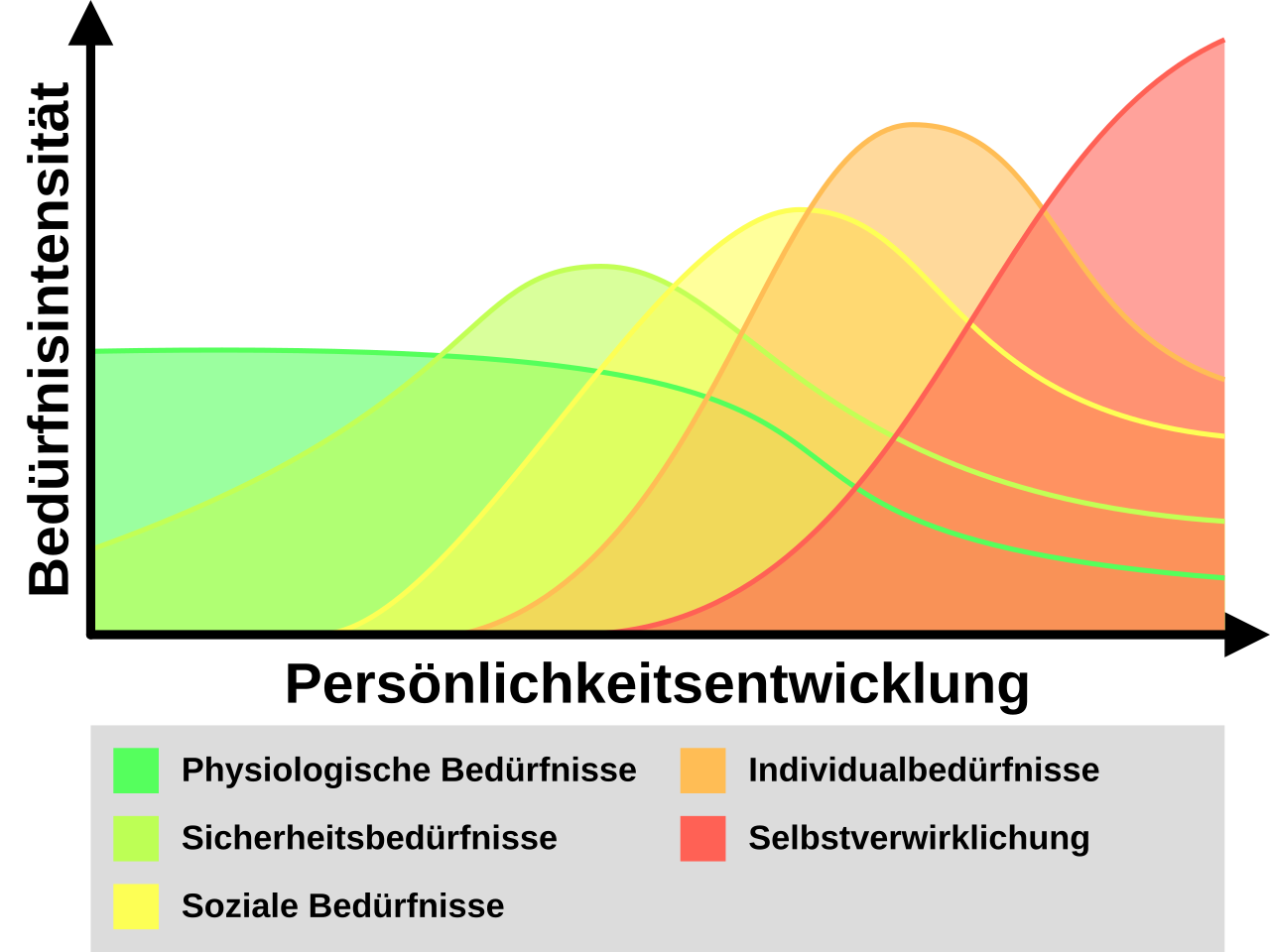
It is a model that arranges human motivations into a tiered structure, starting with basic survival requirements at the base and rising to self-actualization at the top. The core idea is that lower-level needs must be reasonably met before a person can focus on higher ones.
What was Maslow's role in the field of psychology?
He was a central voice in humanistic psychology, arguing that researchers should study what makes people thrive rather than merely cataloguing their symptoms and disorders.
Why is Abraham Maslow considered important?
His hierarchy of needs remains one of the most widely taught frameworks in psychology, and a 2002 survey ranked him as the tenth most cited psychologist of the entire twentieth century.
When was Abraham Maslow born and when did he die?
He was born on April 1, 1908, and passed away on June 8, 1970.
More in Philosophers And Thinkers 1-24
Elsewhere in the Philosophers And Thinkers universe
Spotted an error? Know more?
This is a living reference — every entry is fact-audited, and reader corrections feed straight into our audit queue. Suggest an edit · See this site's audit record