
Al-Kindi
Arab polymath, father of Arab philosophy, and pioneer of cryptanalysis.

Muntadher Saleh · CC BY-SA 4.0
Abū Yūsuf Yaʻqūb ibn ʼIsḥāq aṣ-Ṣabbāḥ al-Kindī (c. He is recognized as the first of the Islamic peripatetic philosophers and is hailed as the 'father of Arab philosophy.' Al-Kindi played a key role in introducing Greek thought to the Muslim world through his work at the House of Wisdom in Baghdad, where he oversaw translations and wrote hundreds of original treatises on subjects ranging from metaphysics to cryptography.
- known_for
- Father of Arab philosophy; pioneer of cryptanalysis and frequency analysis; influential in transmitting Greek thought to the Islamic world
Lore & Background
Al-Kindi was born in Kufa to an aristocratic family of the Kinda tribe, descended from the chieftain al-Ash'ath ibn Qays. His father Ishaq was governor of Basra, where al-Kindi received his preliminary education before completing his studies in Baghdad. He became a prominent figure in the House of Wisdom under Caliph al-Ma'mun and later served as tutor to the son of Caliph al-Mu'tasim. His career declined under al-Wathiq and al-Mutawakkil, with some accounts attributing this to scholarly rivalries or persecution of unorthodox Muslims; at one point he was beaten and his library confiscated. He died in Baghdad during the reign of al-Mu'tamid.
Reader's Guide
Al-Kindi's significance lies in his synthesis of Hellenistic and Peripatetic philosophy with Islamic thought, making Greek philosophy accessible to a Muslim audience. He created much of the standard Arabic philosophical vocabulary, enabling later philosophers like al-Farabi and Avicenna. In mathematics, he helped introduce Hindu-Arabic numerals and advanced cryptography, notably through his book Manuscript on Deciphering Cryptographic Messages, which introduced frequency analysis and statistical inference. His philosophical works emphasized compatibility between philosophy and Islamic theology, though he held revelation superior to reason. Despite his contributions, his writings fell into obscurity after his death, overshadowed by later thinkers and lost to library destruction, though some survived in Latin translations and were rediscovered in a Turkish library in the mid-20th century.
Did You Know?
- He is considered one of the fathers of cryptography and introduced frequency analysis in his book on deciphering messages.
- He created a scale to help doctors gauge the effectiveness of medication by combining mathematics and medicine.
- Al-Kindi served as a tutor to the son of Caliph al-Mu'tasim, but there is no reliable historical evidence that he was employed as a calligrapher by Caliph al-Mutawakkil.
The House of Wisdom and the Translation Mission
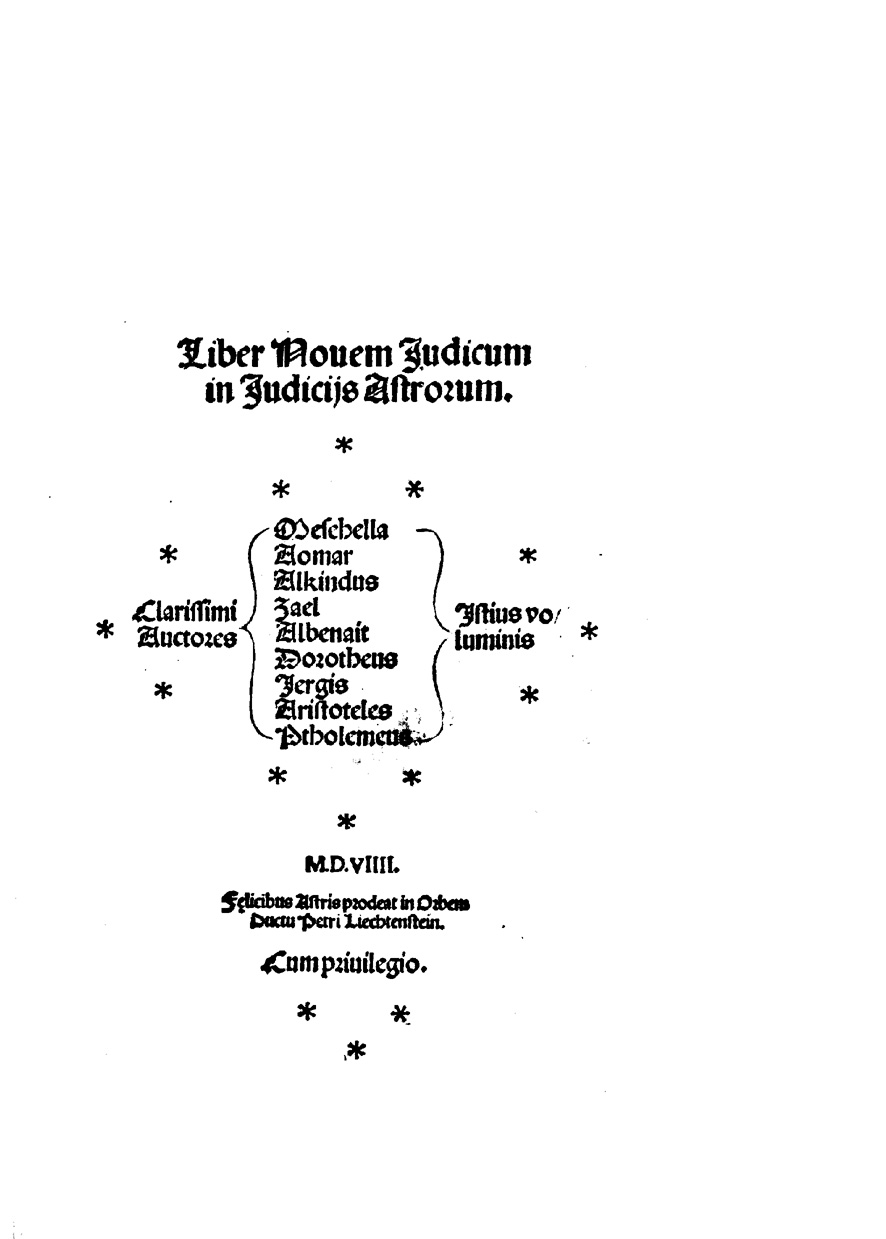
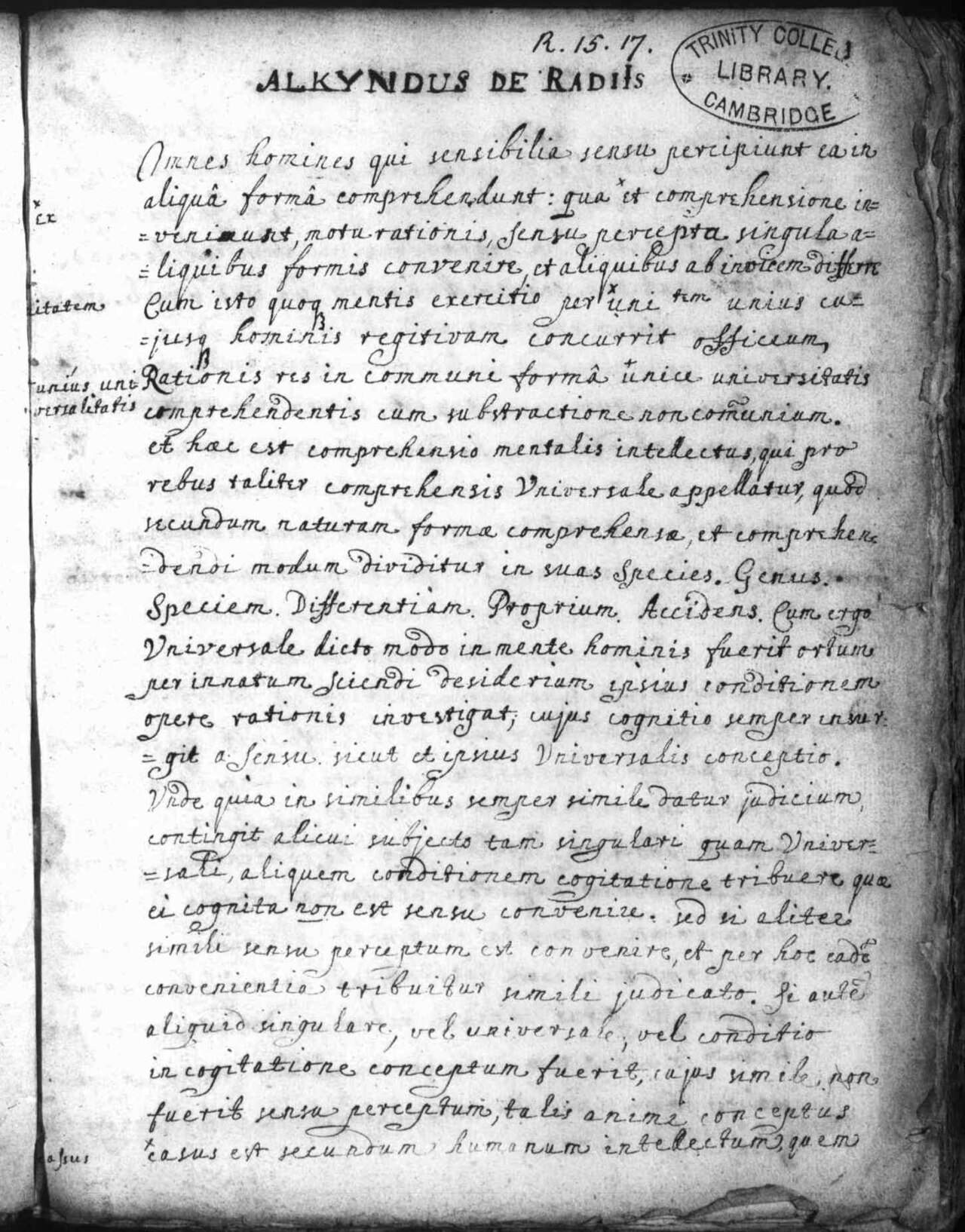
Al-Kindi's career was deeply intertwined with the Abbasid intellectual project centered in Baghdad. Born in Kufa to a noble Kinda family and educated first in Basra under his father's governorship, he eventually moved to Baghdad where caliphs al-Ma'mun and al-Mu'tasim recognized his scholarly gifts. Al-Ma'mun placed him within the House of Wisdom, the caliphal institute dedicated to rendering Greek scientific and philosophical works into Arabic. There, al-Kindi did far more than translate; he absorbed the Peripatetic and Hellenistic traditions, then reworked and promoted them for a Muslim readership. He went on to author hundreds of treatises spanning metaphysics, ethics, logic, psychology, medicine, pharmacology, mathematics, astronomy, optics, and even practical subjects such as perfumery, metallurgy, zoology, and meteorology. His output was staggering—Arab bibliographer Ibn al-Nadim catalogued at least two hundred and sixty volumes, with thirty-two devoted to geometry alone. Though many of these texts were later lost, a remarkable recovery of twenty-four works in a Turkish library during the mid-twentieth century, along with Latin translations by Gerard of Cremona, preserved a portion of this vast corpus for modern scholarship.
Mathematics, Cryptography, and the Birth of Statistical Analysis
In the mathematical sciences, al-Kindi occupied a pivotal position. Working alongside al-Khwarizmi, he helped introduce Hindu-Arabic numerals into the Islamic world and contributed to their further development into what would eventually become the numeral system adopted globally. But his most groundbreaking contribution lay in the field of code-breaking. Building upon earlier work by al-Khalil, al-Kindi composed a treatise on deciphering encrypted messages that is widely regarded as the founding document of cryptanalysis. In it, he introduced the earliest known application of statistical inference to the problem of breaking ciphers, and he devised several novel techniques, most notably frequency analysis—the systematic examination of how often particular letters appear in a text to reveal the underlying key. This was a radical departure from purely trial-and-error approaches. Beyond pure mathematics, al-Kindi also bridged disciplines in practical ways: he constructed a quantitative scale that allowed physicians to measure the efficacy of their medicines, merging mathematical precision with clinical observation in a manner that was remarkably ahead of its time.
Philosophy and the Reconciliation of Reason with Revelation
Al-Kindi's philosophical project was, at its core, an act of cultural translation as much as intellectual argument. Operating from the House of Wisdom, he set out to make Greek thought not merely available but acceptable within a Muslim intellectual framework. He demonstrated that rational inquiry and orthodox Islamic theology—particularly on questions of God's nature, the soul, and prophetic knowledge—were not in contradiction. He held that revelation was the superior source of knowledge because it secured matters of faith beyond the reach of pure reason, yet he insisted that philosophy and natural theology could operate in harmony with revealed doctrine. His efforts laid the linguistic and conceptual groundwork for the entire subsequent Arabic philosophical tradition; much of the standard terminology in which al-Farabi, Avicenna, and al-Ghazali would later write traces back to al-Kindi's coinages. Later thinkers sometimes found his style clumsy, a natural consequence of being the first to write philosophy in Arabic, but without his foundational work, the rich Peripatetic tradition that flourished in the Islamic world might simply never have taken shape.
Patronage, Persecution, and the Long Silence
Al-Kindi's fortunes rose and fell with the political winds of the Abbasid court. Under al-Ma'mun and especially al-Mu'tasim, who appointed him tutor to his son Ahmad, his influence was at its zenith; his most celebrated work, On First Philosophy, was dedicated to al-Mu'tasim. He was also celebrated for his calligraphy and at one point served as a calligrapher under al-Mutawakkil. Yet the accession of al-Wathiq and then al-Mutawakkil marked a dramatic reversal. Theories for his decline range from scholarly rivalries within the House of Wisdom to al-Mutawakkil's broader campaign against perceived unorthodoxy; at one point al-Kindi was physically beaten and his library seized. Henry Corbin, the noted scholar of Islamic thought, recorded that al-Kindi died in Baghdad in 873, a lonely man, during the reign of al-Mu'tamid. After his passing, his philosophical writings rapidly slipped into obscurity. The Mongol destruction of libraries across Persia and Mesopotamia compounded the losses, but the most significant factor, as Felix Klein-Franke argues, was that his work never captured the imagination of the later giants of Islamic philosophy, who ultimately eclipsed his name in the historical record.
Gallery



Frequently Asked Questions
What is Al-Kindi best known for?
He is celebrated as the "father of Arab philosophy" and as a trailblazer in cryptanalysis, particularly for developing early frequency-analysis techniques. He also played a major role in bringing Greek intellectual traditions into the Islamic world.
Where did Al-Kindi do his most important work?
He was a central figure at the House of Wisdom in Baghdad, where he supervised translation projects and produced hundreds of original treatises spanning topics from metaphysics to code-breaking.
How does Al-Kindi fit into the history of philosophy?
He is credited as the first philosopher in the Islamic peripatetic (Aristotelian) school, bridging classical Greek thought and the emerging Islamic intellectual tradition. His work set the stage for later thinkers like al-Farabi and Ibn Sina.
What did Al-Kindi contribute to cryptography?
He is recognized as one of the earliest practitioners of cryptanalysis, having described methods for breaking substitution ciphers by analyzing letter frequency. This made him a foundational figure in what we now call frequency analysis.
More in Philosophers And Thinkers 1-24
Elsewhere in the Philosophers And Thinkers universe
Spotted an error? Know more?
This is a living reference — every entry is fact-audited, and reader corrections feed straight into our audit queue. Suggest an edit · See this site's audit record