
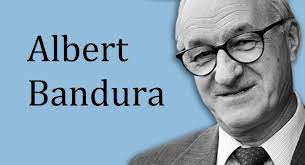
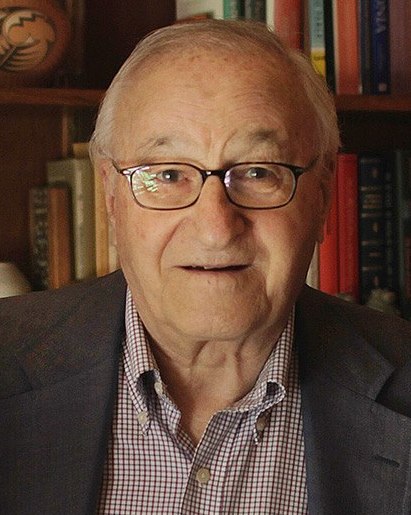
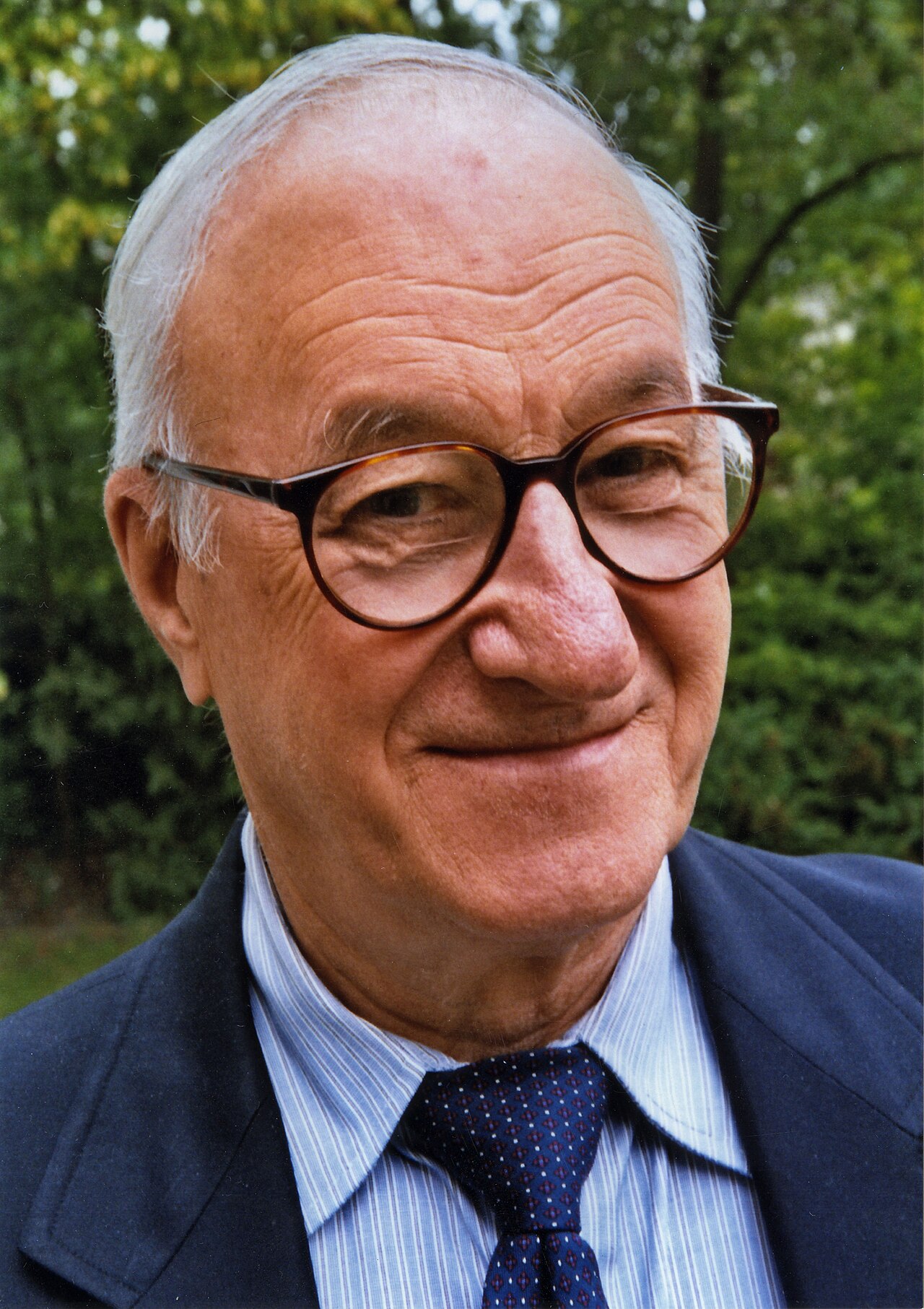
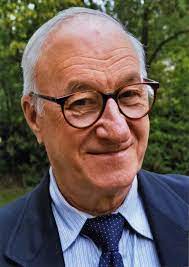
Albert Bandura
Psychologist who developed social learning theory and conducted the Bobo doll experiment.

[email protected] · CC BY-SA 4.0
Albert Bandura advanced the social learning theory by including the individual and the environment in the process of learning and imitating behaviour. According to the source, children and adults learn or change behaviours by imitating behaviours observed in others. Bandura conducted his bobo doll experiment in 1961 and developed his social learning theory in 1977. These contributions to the field of developmental psychology cemented a strong knowledge foundation and allowed researchers to build on and expand our understanding of human behavior.
- field
- Psychology
- known_for
- Social learning theory, Bobo doll experiment
Verified Timeline
Lore & Background
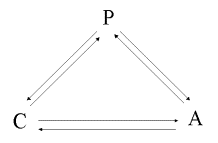
Albert Bandura's social learning theory linked human behavior changes with environmental interactions. The source states that predictable variables were behavior potential, expectancy, reinforcement value and psychological situation. Bandura mentions that the environment plays an important role as it is the stimuli that triggers the learning process. For example, according to Bandura (1978), people learn aggressive behaviour through 3 sources: Family members, community and mass media. Research shows that parent who prefer aggressive solution to solve their problems tend to have children who use aggressive tactics to deal with other people. Research also found that communities in which fighting prowess are valued have a higher rate of aggressive behaviour. Also, findings show that watching televisions can have at least 4 different effect on people: 1) it teaches aggressive style of conduct, 2) it alters restraints over aggressive behavior, 3) it desensitizes and habituate people to violence and 4) it shapes people's image of reality. The environment also allows people to learn through another person's experience. For example, students don't cheat on exams (at least no openly) because they know the consequences of it, even if they never experienced the consequences themselves. However, still according to Banduras, the learning process does not stop at the influence of the family, community and media, the internal process (individual thoughts, values, etc.) will determine at which frequency and which intensity an individual will imitate and adopt a certain behaviour.
Reader's Guide
Bandura's significance lies in his social learning theory, which he developed in 1977. The source notes that his bobo doll experiment in 1961 demonstrated observational learning. According to the source, Bandura focused most of his research on aggression. His work showed that people learn aggressive behaviour through family members, community and mass media. The source also indicates that the internal process (individual thoughts, values, etc.) will determine at which frequency and which intensity an individual will imitate and adopt a certain behaviour. Bandura's contributions to the field of developmental psychology cemented a strong knowledge foundation and allowed researchers to build on and expand our understanding of human behavior.
Did You Know?
- Bandura conducted his bobo doll experiment in 1961.
- Bandura developed his social learning theory in 1977.
- According to Bandura (1978), people learn aggressive behaviour through 3 sources: Family members, community and mass media.
- Bandura's research showed that watching television can teach aggressive style of conduct, alter restraints over aggressive behavior, desensitize and habituate people to violence, and shape people's image of reality.
- Bandura found that the internal process (individual thoughts, values, etc.) determines at which frequency and intensity an individual will imitate and adopt a certain behaviour.
The Bobo Doll Experiment
In 1961, Albert Bandura carried out what would become one of the most recognizable studies in developmental psychology: the bobo doll experiment. At the time, the dominant frameworks for explaining how humans acquire new behaviors were B.F. Skinner's behaviorism and Sigmund Freud's psychoanalytic theory. Bandura's work offered a different lens. His experiment demonstrated that people can learn simply by watching others act. The process he outlined is deceptively simple: an individual observes a behavior performed by someone else, absorbs the information, and then adopts that behavior for themselves. This insight placed observation at the center of learning rather than direct reinforcement or internal drives. By showing that new actions could be picked up merely through watching what others do within a given environment, Bandura helped shift the conversation in developmental psychology away from purely individual mechanisms and toward the social contexts—such as family, peers, and media—where learning actually takes place.
Social Learning Theory
In 1977, Bandura formalized his social learning theory, providing a structured framework for understanding how people construct meaning and identity through their interactions with others and their surroundings. Central to his model is the idea that learning is not a solitary, internal event but a dynamic exchange between an individual and the social environment. Different contexts—schools, families, peer groups, media—each offer distinct opportunities for a person to observe, absorb, and ultimately replicate behaviors they witness. For Bandura, a learning process could genuinely be called social only when three conditions were met: a measurable shift in the learner's understanding had occurred, that shift extended beyond the single individual into wider communities or networks of practice, and the entire process was mediated by interaction between actors within a social network. This tripartite criterion distinguished social learning from mere imitation and anchored it firmly in the relational fabric of everyday life.
Breaking from Behaviorism and Psychoanalysis
During the first half of the twentieth century, developmental psychology was largely dominated by two competing explanations for how humans pick up new behaviors. B.F. Skinner's behaviorism emphasized external reinforcement, while Sigmund Freud's psychoanalytic theory looked inward to unconscious drives. The 1950s and 1960s marked a turning point. A new generation of psychologists, including Julian Rotter, Albert Bandura, and Robert Sears, began to argue that learning could not be reduced to either stimulus-response conditioning or internal psychic conflict alone. Rotter had laid groundwork in 1954 by linking behavioral change to environmental interactions and identifying variables such as expectancy and reinforcement value. Bandura's 1961 bobo doll experiment then provided the empirical punch that made the observation-based model impossible to ignore. Together, these researchers shifted the field's attention toward the social contexts in which learning actually unfolds, opening a window into how peers, families, and broader cultural environments shape the behaviors individuals adopt.
A Foundation for Future Research
Bandura's contributions to developmental psychology did more than introduce a new theory; they established a durable knowledge base that subsequent researchers could extend and refine. By the time his social learning theory was fully articulated in 1977, the field had already moved well beyond the narrow confines of Skinnerian conditioning and Freudian drives. The 1950s through the 1990s saw social learning theories gain substantial traction, and Bandura's work sat at the heart of that expansion. His insistence that learning must be situated within wider social units, that it must occur through genuine interaction between actors in a network, and that it must produce a verifiable change in understanding gave later scholars a clear set of criteria to test against. In this way, his framework became a springboard: researchers could build on his observation-based model, expand its scope, and apply it to new populations and contexts. The result was a richer, more socially grounded understanding of how human behavior develops across the lifespan.
Gallery
Frequently Asked Questions
Who is Albert Bandura?
Albert Bandura (1925–2021) was a Canadian-American psychologist who spent his career at Stanford University. He is best known for developing social learning theory and the concept of self-efficacy, reshaping how we understand human behavior and learning.
What was the Bobo doll experiment?
In 1961, Bandura designed a now-iconic study in which children watched an adult act aggressively toward an inflatable doll and then imitated those actions. The experiment became a landmark demonstration that people can learn behaviors simply by observing others.
What is self-efficacy according to Bandura?
Self-efficacy is Bandura's term for a person's belief in their own ability to succeed at a specific task or situation. He argued that this internal sense of competence heavily influences whether someone will attempt a challenge, persist through difficulty, and ultimately perform well.
How did Bandura connect behaviorism and cognitive psychology?
Bandura's social cognitive theory served as a bridge between the two dominant schools of thought in mid-twentieth-century psychology. By showing that mental processes like attention, memory, and expectation mediate what we learn from the environment, he moved the field beyond purely stimulus-response models.
What was Bandura's lasting legacy in psychology?
His work on observational learning, self-efficacy, and social cognition influenced decades of research in education, clinical therapy, and personality psychology. He passed away on July 26, 2021, leaving behind a framework that remains central to how psychologists understand human agency and social influence.
More in Philosophers And Thinkers 1-24
Elsewhere in the Philosophers And Thinkers universe
Spotted an error? Know more?
This is a living reference — every entry is fact-audited, and reader corrections feed straight into our audit queue. Suggest an edit · See this site's audit record